
Antisemitism and anti-Muslim racism are too often treated as separate problems – or, worse, pitted against one another, with one invoked to excuse or deflect from the other. Both have risen sharply across Europe in recent years, precisely as many societies are retreating from their commitment to pluralism and political forces are increasingly challenging the idea that diversity is a democratic good worth protecting.
This raises an uncomfortable question: What happens when forms of hatred are played off against each other in public debate – and what is lost for the communities caught in between? Bringing together practitioners and experts from Jewish and Muslim communities and wider civil society, this panel will examine what protection, resilience, and solidarity look like in practice. How are communities responding to concrete threats? Which institutional and political strategies are effective? And what does it take to build alliances between communities whose experiences of exclusion do not simply mirror one another?
Taking the UK as a point of departure, the discussion will explore how these tensions play out on the ground – and what they demand of communities, civil society, and public institutions.
We warmly invite you to join us for this conversation and to consider what defending pluralism requires of all of us today.
The European Practitioners Network Against Antisemitism (EPNA) connects more than 100 institutions working to combat antisemitism across Europe and beyond. It promotes international cooperation, facilitates the exchange of expertise and experience, and supports its members in developing effective, practice-based prevention strategies.
The Future 500 programme brings together emerging leaders from politics, business, academia, the arts, and civil society. Through international interreligious, worldview, and intercultural dialogue, participants develop and implement concrete initiatives that strengthen social cohesion across Europe.
Both programmes are part of DialoguePerspectives e.V., a Berlin-based European platform working to strengthen pluralistic and resilient societies. Its work focuses on interreligious and worldview dialogue, combating antisemitism, developing a pluralistic European culture of remembrance, and communicating contemporary Jewish life through educational programmes across Germany.
Future 500’s declared aim is to approach interreligious and worldview dialogue differently: more critically, more honestly, and with greater relevance to the conflicts shaping European societies and their religious and worldview communities. The Autumn Workshop 2026 takes this ambition as its starting point.
Interreligious dialogue often treats religion as a neutral resource, dangerous only when appropriated by political actors or extremists. The Future 500 Autumn Workshop 2026 challenges that assumption.
Violence is not simply imposed on religious traditions from outside. It is also present in foundational texts, authoritative interpretations, institutional histories, and inherited practices. Conquest narratives in the Tanakh, Qur’anic passages on armed conflict, crusading theology, and classical jihad jurisprudence all show that mainstream traditions – not only fringe actors -have had to define when violence may be justified. This remains politically consequential. The Russian Orthodox Church has given theological legitimacy to the war against Ukraine; jihadist organisations invoke scripture; evangelical, Hindu nationalist, and other political movements mobilise religious narratives to legitimise exclusion and violence.
The workshop therefore asks not only how religion is weaponised, but what within religious traditions makes that weaponisation possible. It also examines how older structures of religious enmity survive in secular forms, including antisemitism and anti-Muslim racism. Religious communities cannot limit their responsibility to condemning extremism or the misuse of faith. They must also confront the violent elements and exclusions within their own traditions, make their interpretive choices visible, and develop theological, educational, and institutional safeguards against their political activation.
The workshop explores how violence is transmitted, legitimised, and mobilised – and what responsibility follows when it is not merely external to tradition, but a recurring possibility within it.
The workshop explores the following questions:
The goal is not to indict religion, but to add to the honesty within our field: a comparative, cross-religious analysis of how violence is legitimised, resisted, and lived with from within, and what that means for building durable solidarity across communities who have inherited very different relationships to this violence.
Through a combination of expert input, interactive sessions, and guided engagement with London as a multireligious case study, participants will explore how violence is inscribed in religious tradition, how communities respond to it, and how it manifests as antisemitism and anti-Muslim racism today.
Please note: This workshop takes place alongside the EPNA autumn workshop „Plural Societies, Shared Responsibility: Strengthening Jewish Community Responses to Antisemitism“. The two groups will join for parts of the shared programme. Participants active in both networks are asked to register for the programme of their choice.
Travel costs will be reimbursed up to €300 (2nd class only). Accommodation details and detailed information regarding travel and reimbursement will be provided after the application process.
Jo Frank (Director DialoguePerspectives e.V.)
Kira Wisniewski (Programme Lead Future 500)
Interreligious and worldview dialogue is one of the most established instruments of peacebuilding and social cohesion in Europe. Yet the evidence of its impact is surprisingly thin. Encounter happens. Representation is secured. But sustained cooperation, shared civic agency, and lasting change in conflict dynamics remain rare.
Recent crises raise difficult questions about the resilience of dialogue initiatives across Europe. The Russian Orthodox Church’s theological legitimisation of the war against Ukraine is a prominent example. When the Russian Orthodox Church gave its blessing to Russia’s invasion, it failed not only to prevent a war, but also to fulfil its duty. It supplied that war with a theology, using the language of spiritual encounter to sanctify conquest and turning the machinery of reconciliation into an instrument of legitimisation.
The uncomfortable question this raises is therefore whether the concept of dialogue itself has become part of the problem. In his keynote, Cyril Hovorun, a Ukrainian Orthodox theologian and one of the most precise voices on the relationship between religion and political power, will address this question. Having served in senior roles within the Orthodox Church, he offers both a deep knowledge of Orthodox theology and first-hand experience of how faith is enlisted in the service of empire. The keynote will be followed by a conversation with Jo Frank and Cyril Hovorun that will further explore the limits of interreligious dialogue in general and discuss possible implications for the future of the interreligious field.
The event will be conducted in English.
Please register here:
The Future 500 programme brings together Europe’s most promising talents from politics, business, academia, the arts and civil society. Future 500 develops concrete socio-political initiatives through international interreligious-worldview and intercultural dialogue, implementing these within European civil society. Through its work, Future 500 sustainably strengthens social cohesion across Europe. Future 500 is a programme of DialoguePerspectives e.V.
DialoguePerspectives e.V. is a Berlin-based European platform dedicated to strengthening a plural European society. DialoguePerspectives develops impact-oriented civil society programmes for a resilient European society. The focus areas of DialoguePerspectives’ work are interreligious and worldview dialogue, combatting antisemitism in Europe, developing and establishing a pluralistic European culture of remembrance, and communicating Jewish life in Germany through nationwide educational programmes.
5 – 7 July 2026 | Berlin, Germany
Interreligious and worldview dialogue is one of the most established instruments of peacebuilding and social cohesion in Europe. Yet the evidence of its impact is surprisingly thin. Encounter happens. Representation is secured. But sustained cooperation, shared civic agency, and lasting change in conflict dynamics remain rare.
Recent crises have raised difficult questions about the resilience of dialogue initiatives across Europe: the Russian Orthodox Church’s theological legitimisation of the war against Ukraine, the rupture of Jewish–Muslim dialogue after October 7 and the war in Gaza, and rising antisemitism and anti-Muslim racism despite decades of interreligious dialogue programming.
The uncomfortable question this workshop puts on the table is not how to improve dialogue formats – but whether the concept of dialogue itself has become part of the problem. Most current dialogue practice rests on assumptions that are rarely examined: that encounter reduces prejudice, that shared humanity can be excavated beneath doctrinal difference, and that religious communities are coherent partners capable of speaking with one voice. These assumptions deserve scrutiny. They may not only be empirically fragile – they may actively obscure the power asymmetries, internal heterogeneity, and real conflicts of interest that structured interreligious spaces were never designed to address.
The workshop therefore steps back from methodology to ask more fundamental questions:
A further challenge emerges from transhumanist developments such as cognitive enhancement, digital identity, human–AI hybridisation, and the technological contestation of finitude and embodiment. These developments are already reshaping what it means to be human in a community. And with it, the question of who the dialogue partner actually is.
By integrating perspectives from conflict research, the workshop approaches dialogue not as a harmony project but as a serious form of conflict engagement. It asks what dialogue can realistically achieve, where its structural limits lie, and which normative foundations are necessary for a framework that does not evade tension but treats it as the actual site of democratic work.
The goal is not critique for its own sake, but reconstruction: the development of a dialogue concept that is anthropologically grounded, conflict-aware, transhumanistically literate, and honest about what dialogue can and cannot do. The workshop will bring together several key European actors in the field of interreligious and worldview dialogue, as well as representatives of major European dialogue initiatives. Their practical experience will serve as a starting point for addressing these fundamental questions from within the realities of dialogue practice.
Through a combination of workshops, interactive sessions, and exchanges with experts, participants will explore the challenges and possibilities of contemporary dialogue practice. The programme will place a particular emphasis on engaging conflict, critically reflecting on existing dialogue approaches, and developing new perspectives for interreligious and worldview engagement.
PDF Call for Applications here.
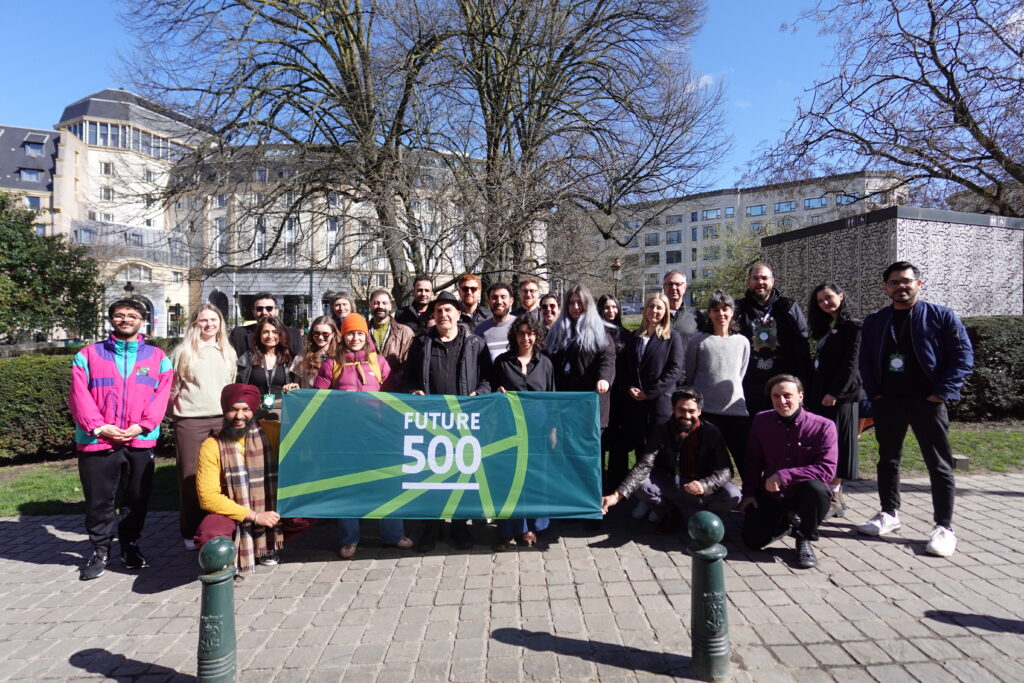
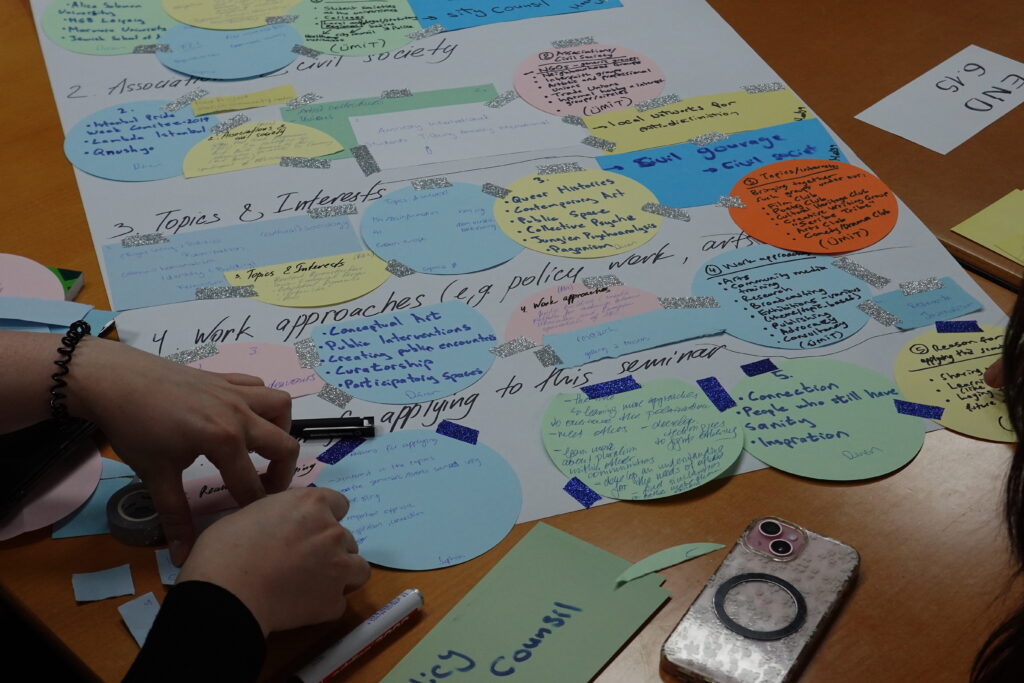
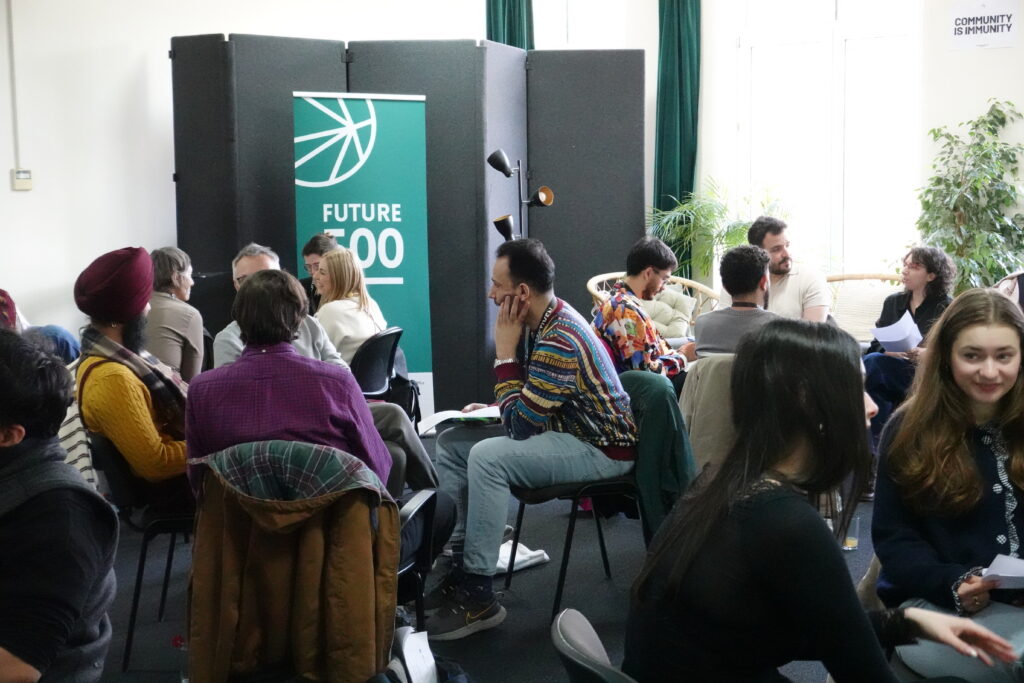
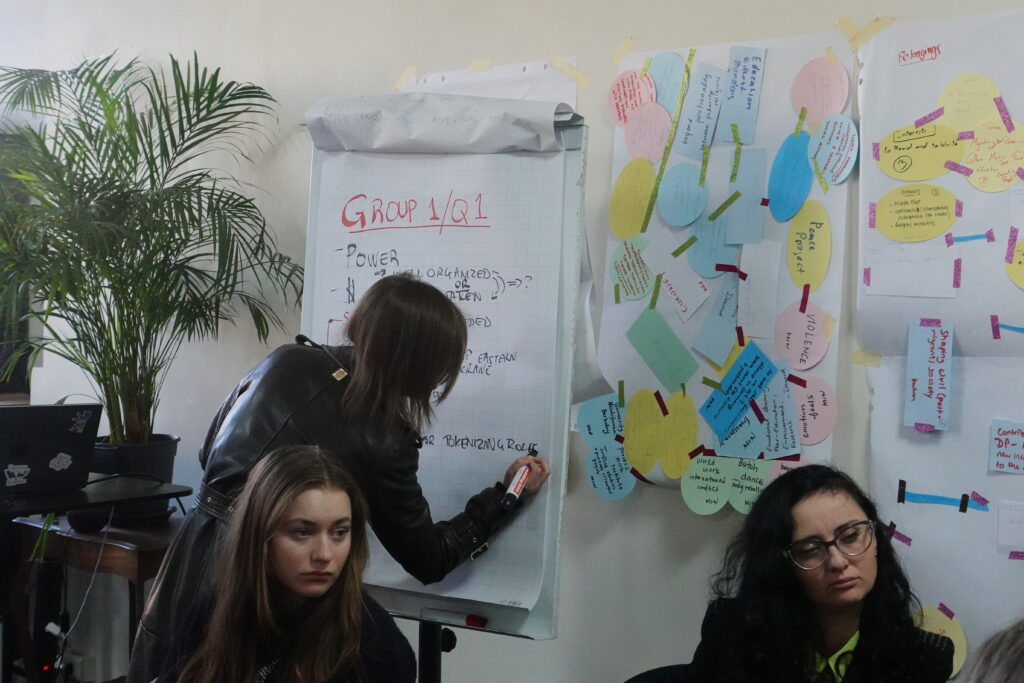
Future 500 Spring Workshop 2026 “Rebuilding Bridges. Dialogue, Trust and Solidarity Post October 7th”
14 – 18 March 2026 | Brussels, Belgium
Sustainable dialogue requires more than mere exchange; it demands robust structures that can withstand crisis. Trust can only be rebuilt when dialogue moves beyond agreement to engage with deep differences – and when people are equipped with the tools to identify misinformation and engage in grounded, informed dialogue.
Europe’s dialogue infrastructure is failing at the moment it is needed most. The 7 October attacks, the war in Gaza, Russia’s invasion of Ukraine — these crises have not only deepened geopolitical fault lines, they have changed the basic conditions of public speech. As Igor Mitchnik of Austausch e.V. put it: “People who used to talk stop, and words that once connected begin to divide.” Spaces built over decades are collapsing in days. Algorithms reward outrage, narratives calcify, and institutions reach for dialogue formats designed for a world that no longer exists. Something has to give — and it won’t be the conflicts.
The Future 500 Spring Workshop started from a blunt premise: dialogue cannot aim at consensus when the ground itself is contested. The goal is staying in conversation despite conflict — moving from “safe spaces” to what participants called “braver spaces.” Sessions examined how framing, disinformation and algorithmic curation drive polarisation; how antisemitism, racism and the Israel–Palestine discourse carry historical weight that current debates rarely reckon with; and how AI-driven systems shape — and might yet reshape — democratic communication. Contributions from the EU-funded TWON project were particularly striking here. Simulations and group scenarios pushed these questions out of the abstract. So did sessions on community work in Eastern Europe’s conflict and post-conflict settings, where civic engagement survives under conditions most Western practitioners have never faced.
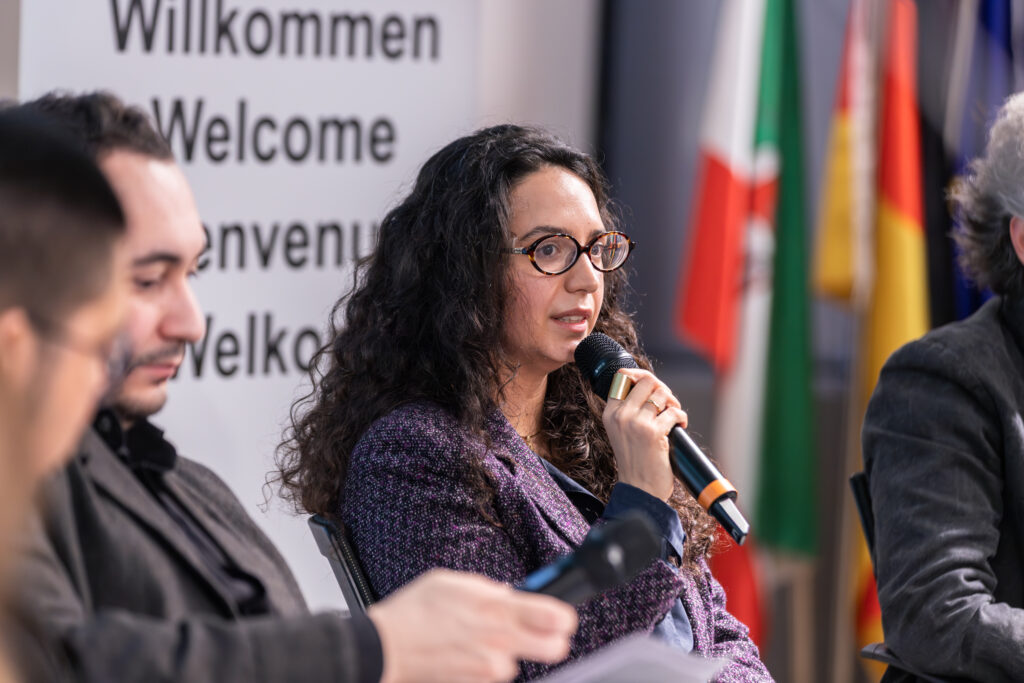
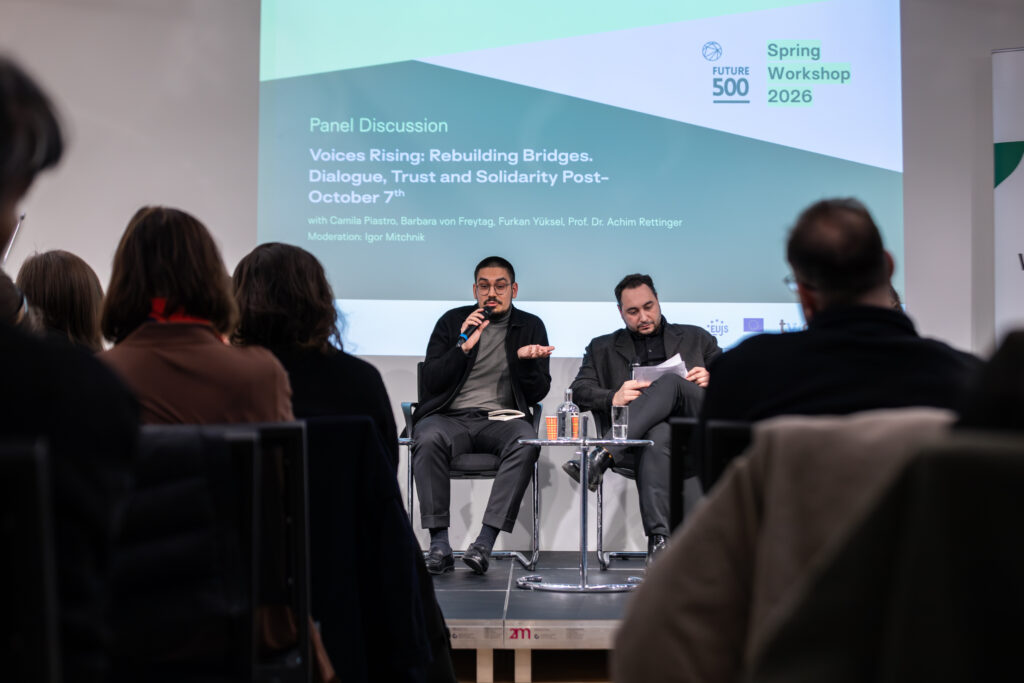
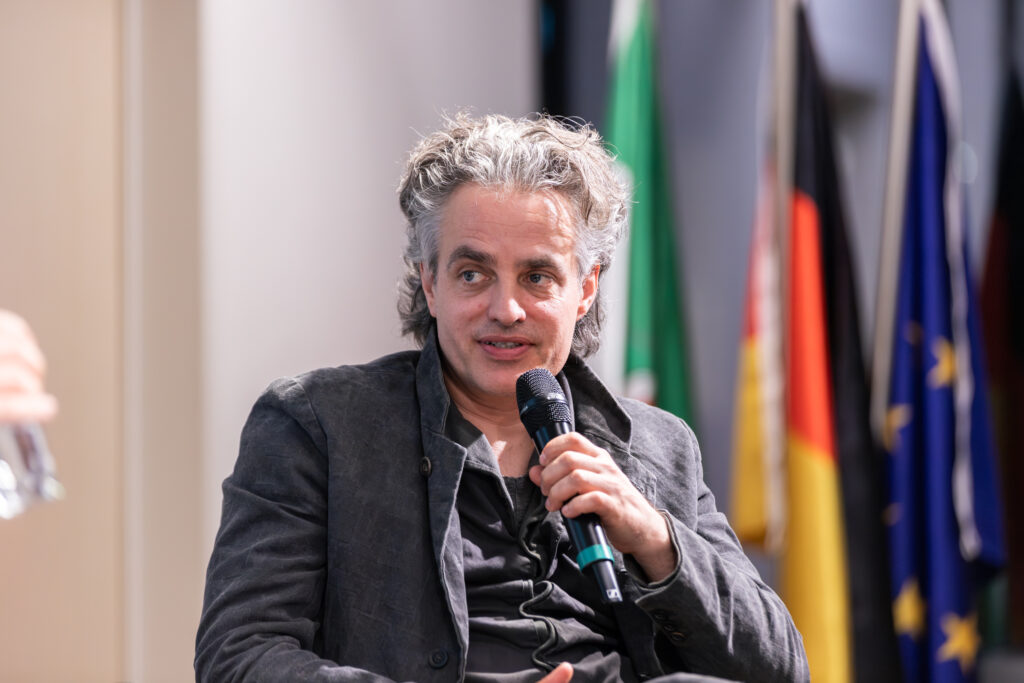
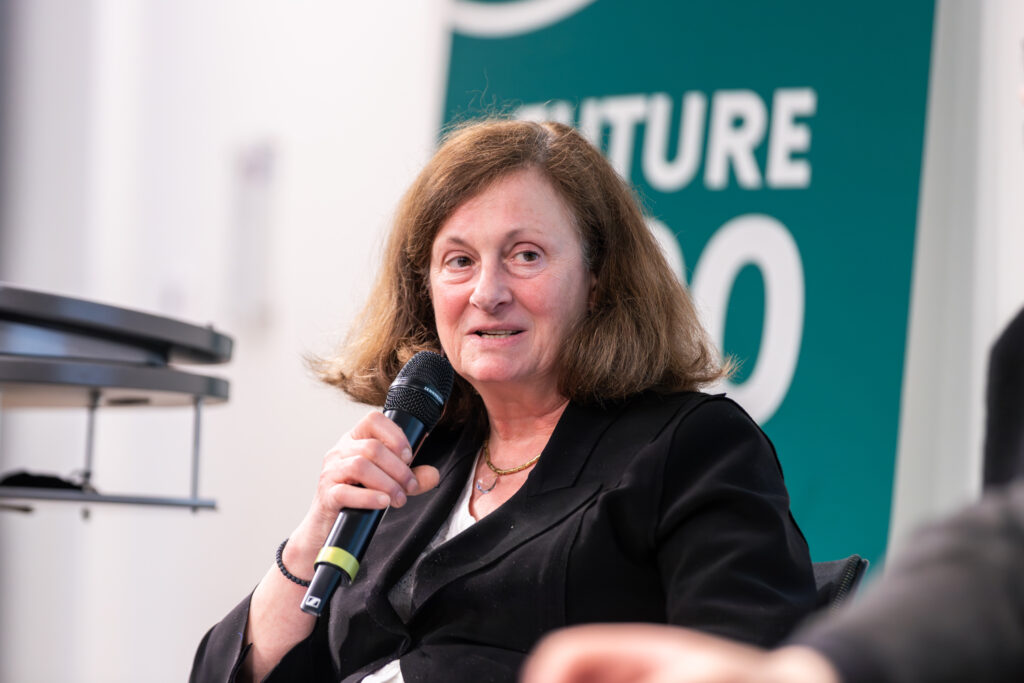
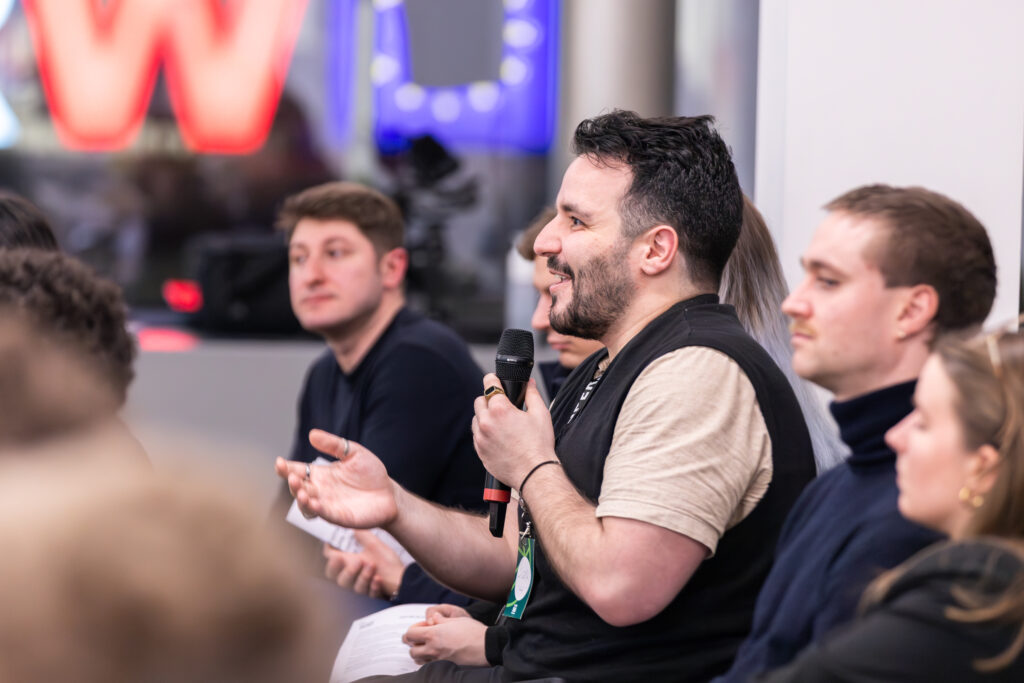
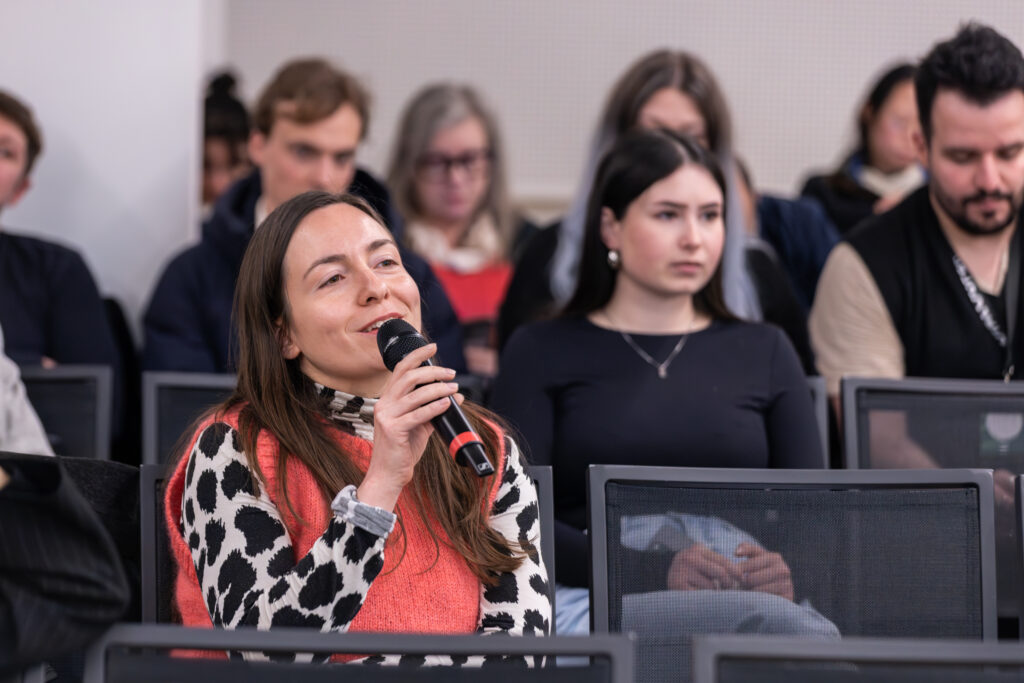
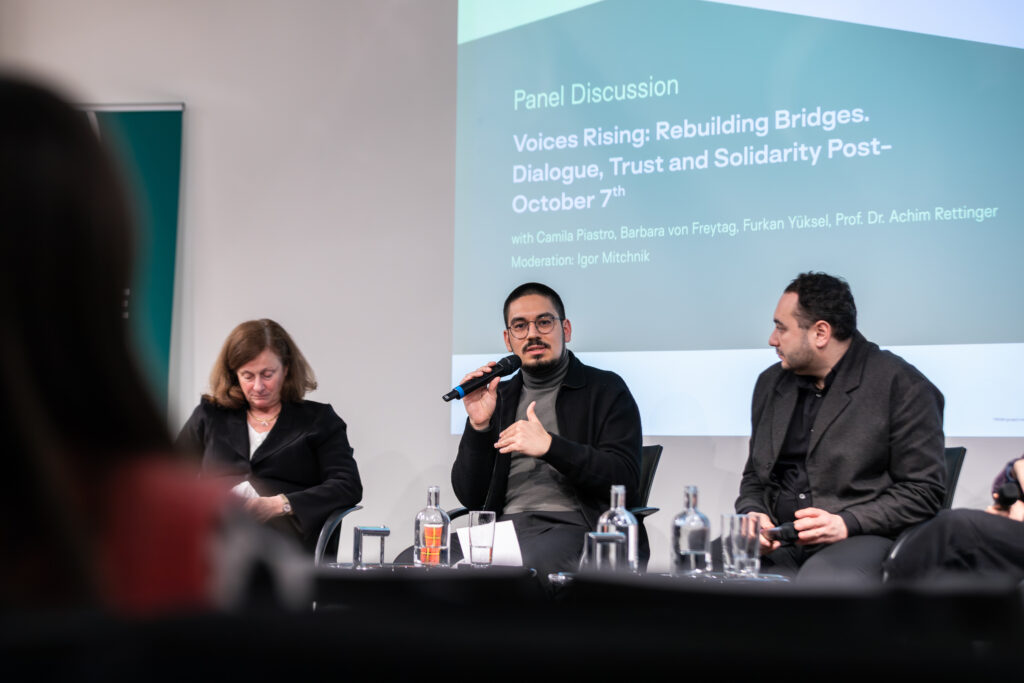
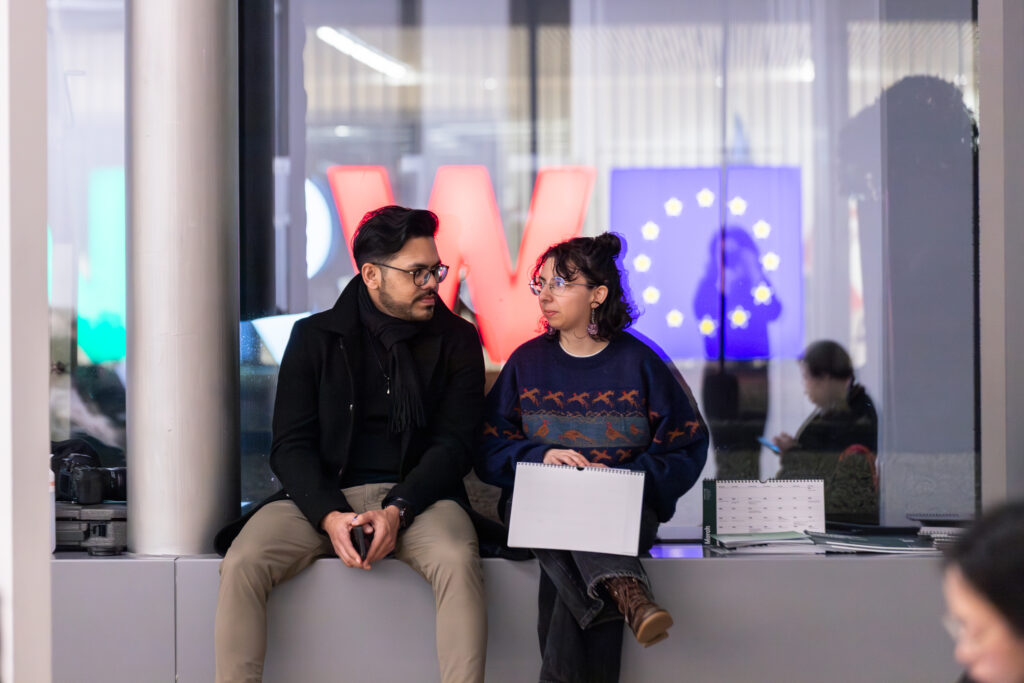
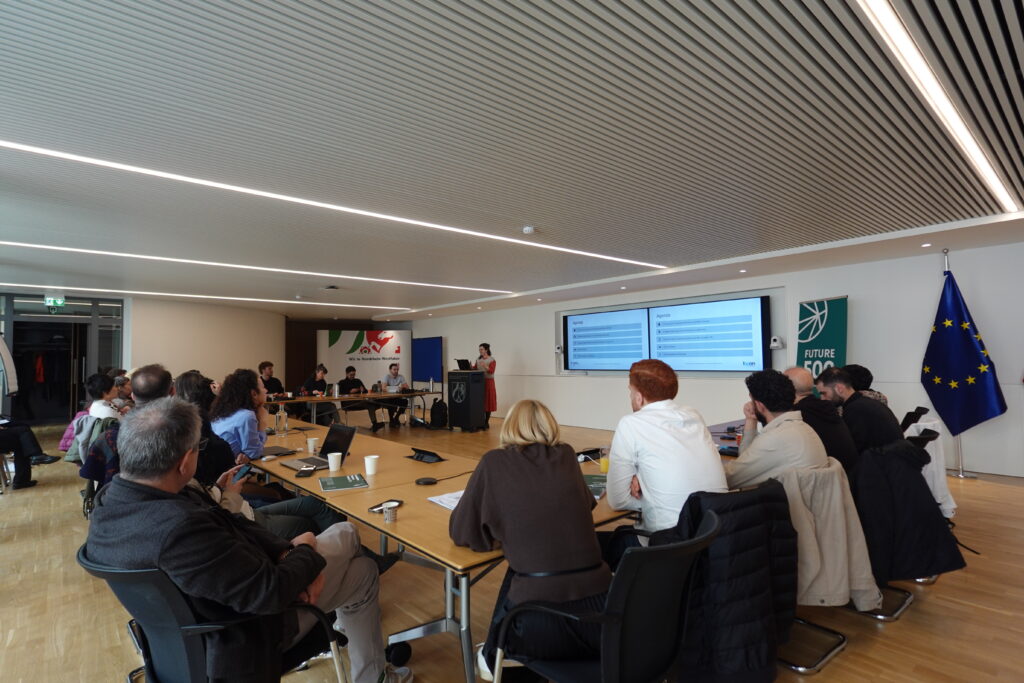
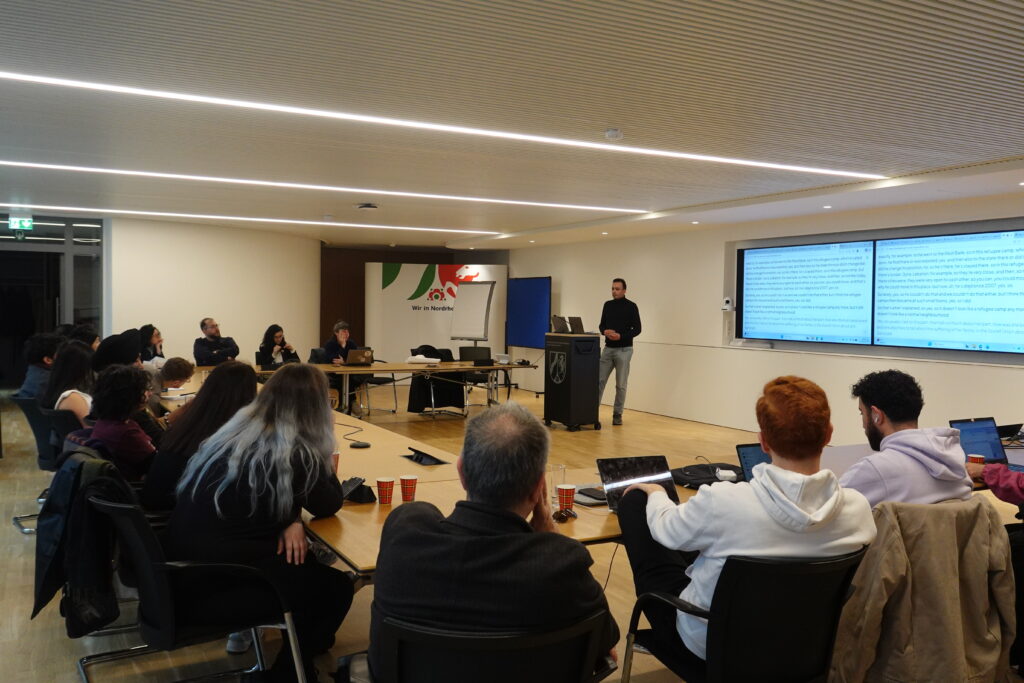
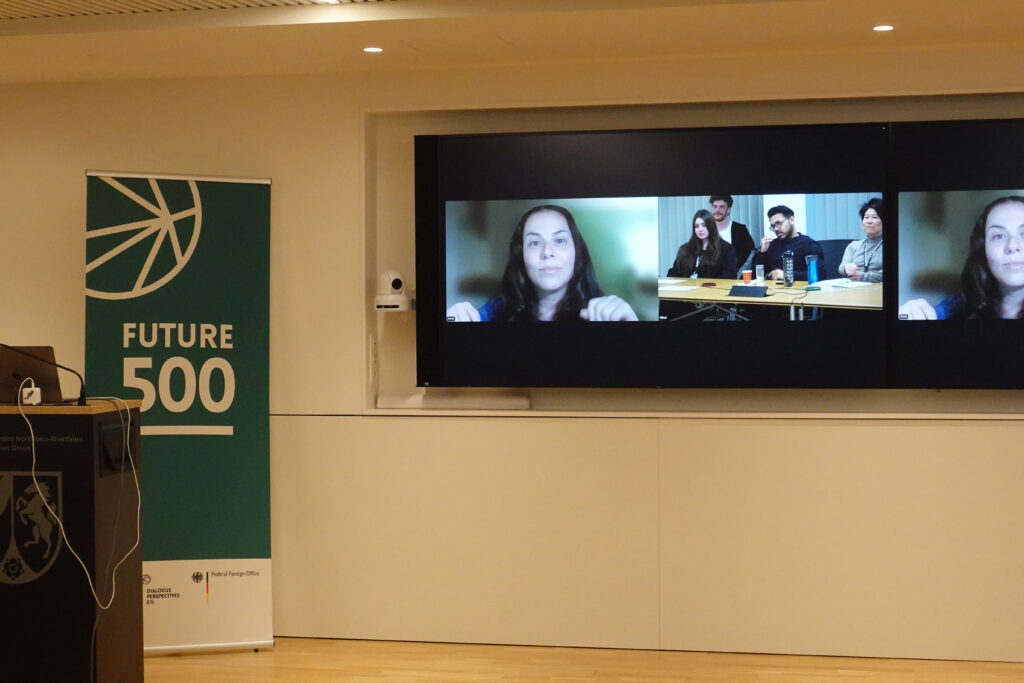
The workshop culminated in a public panel at the Representation of North Rhine-Westphalia in Brussels — journalists, academics, educators, civil society practitioners in the same room, working the same problem. The exchange was live, not performed: perspectives were questioned, pushed, developed. The evening’s title, “Voices Rising: Rebuilding Bridges — Dialogue, Trust and Solidarity Post-October 7th”, stopped being a heading and became a description.
For more detailed information on the sessions and speakers, please refer to the full workshop programme.
Next Steps
Building on these insights, the Future 500 programme will take a decisive step further in its upcoming workshop by shifting the focus from sustaining dialogue under pressure to questioning the concept of dialogue itself. It will address a more fundamental question: whether the current concept of dialogue remains adequate – or whether it requires a deeper rethinking of its assumptions, limits and normative foundations. Rather than asking how dialogue can be improved, the workshop will examine whether prevailing approaches risk obscuring the very tensions they seek to address.
5 – 7 July 2026 | Future 500 Summer Workshop 2026 | Berlin

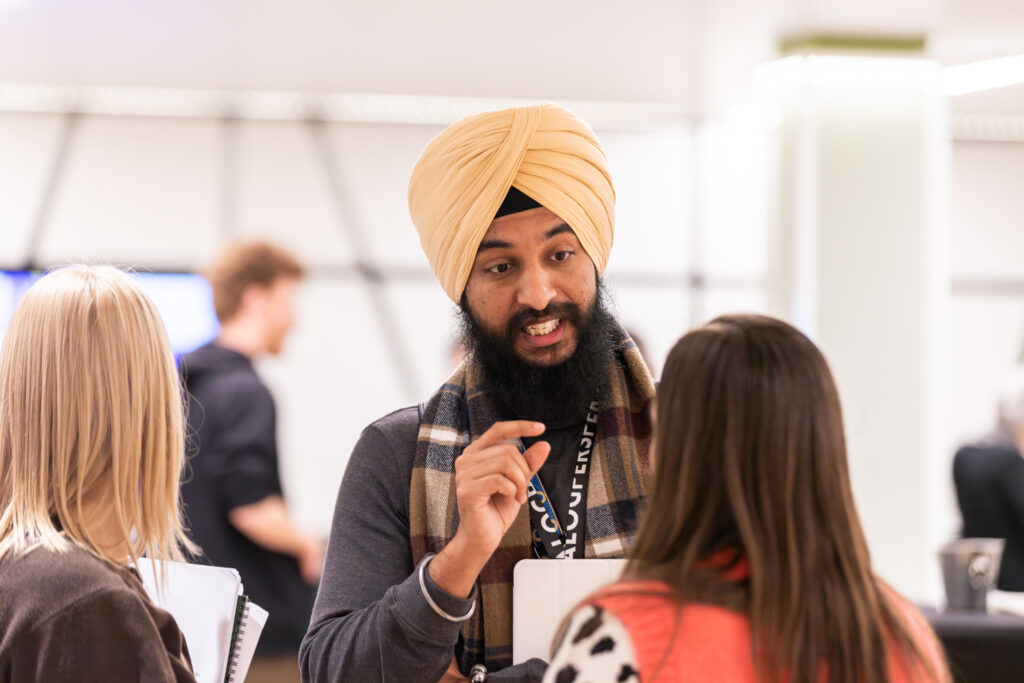
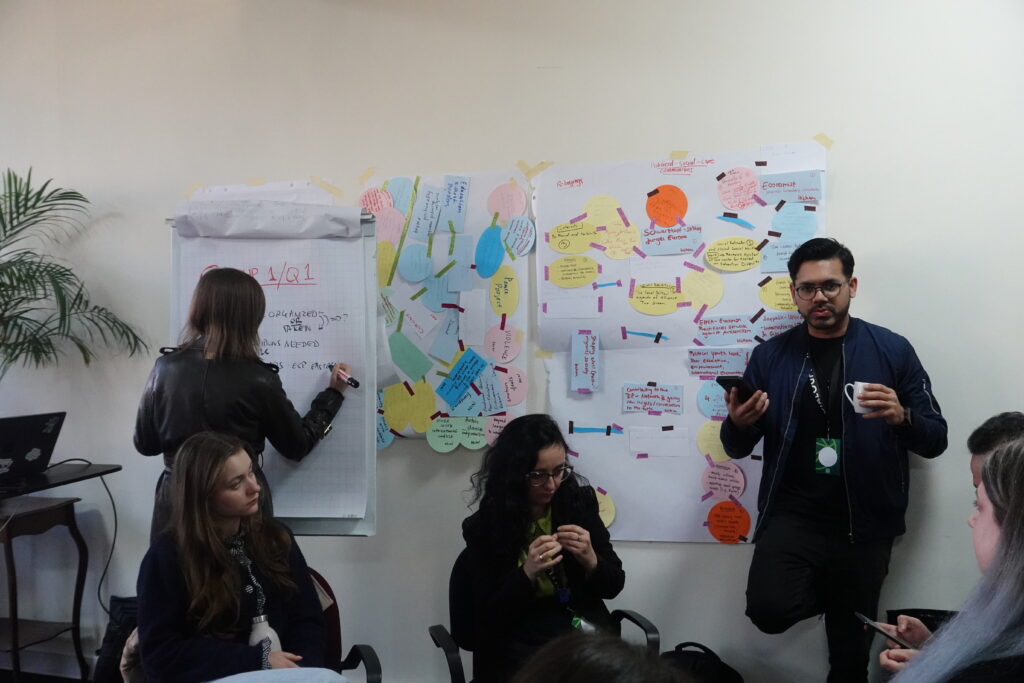
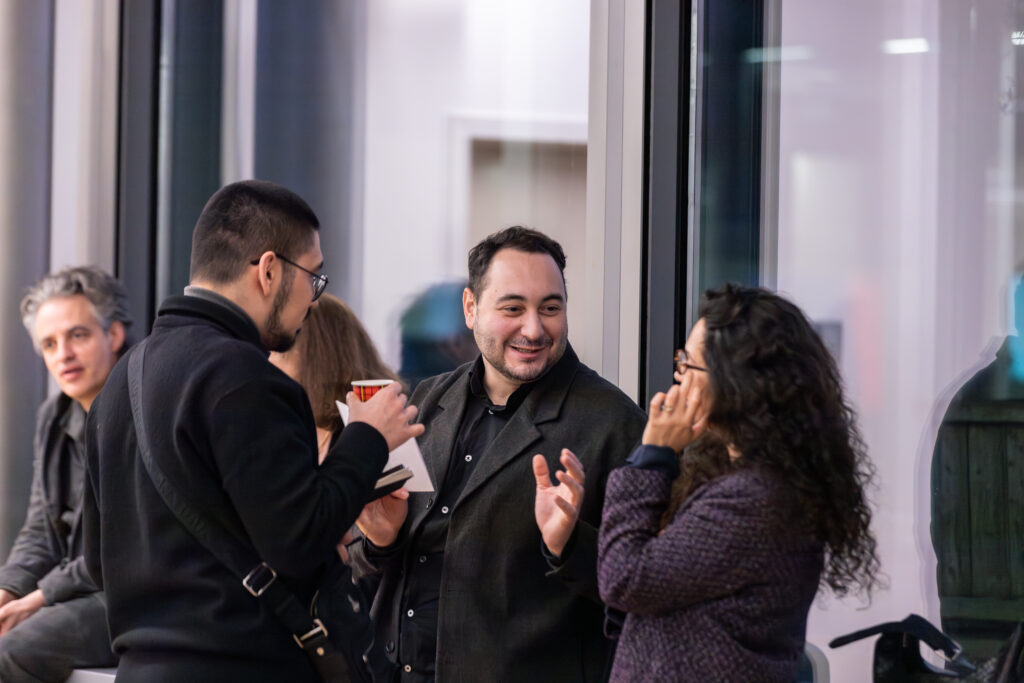
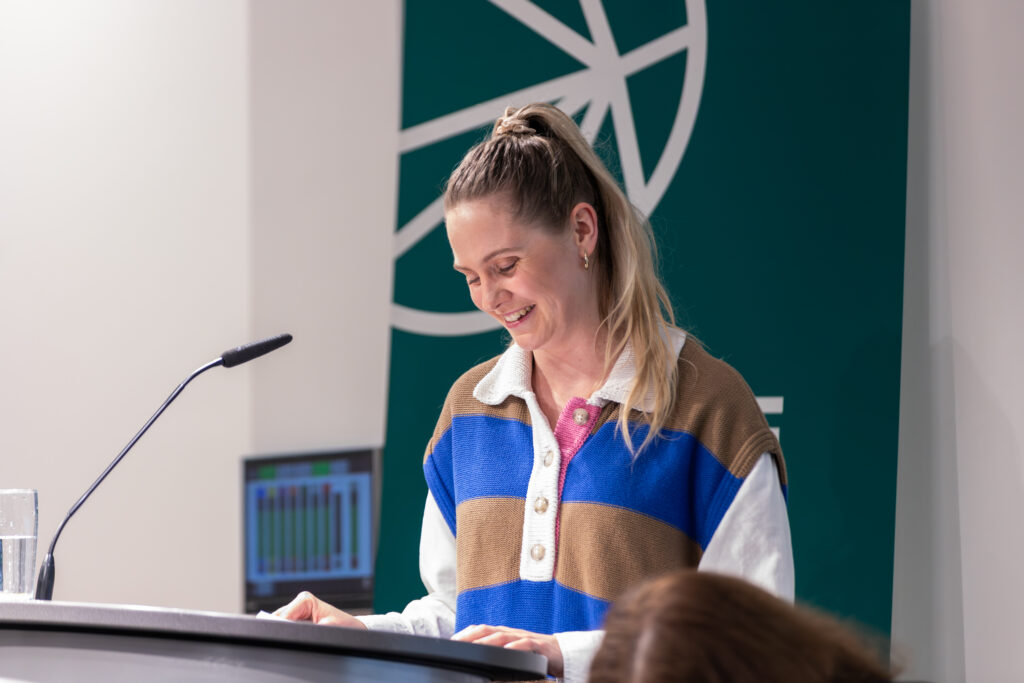
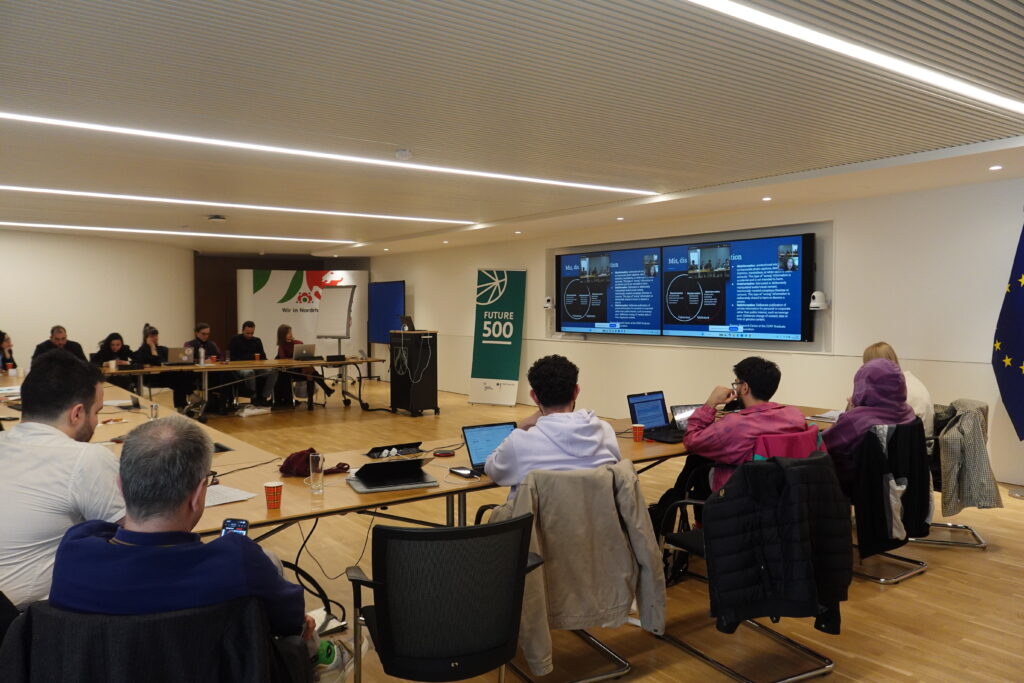
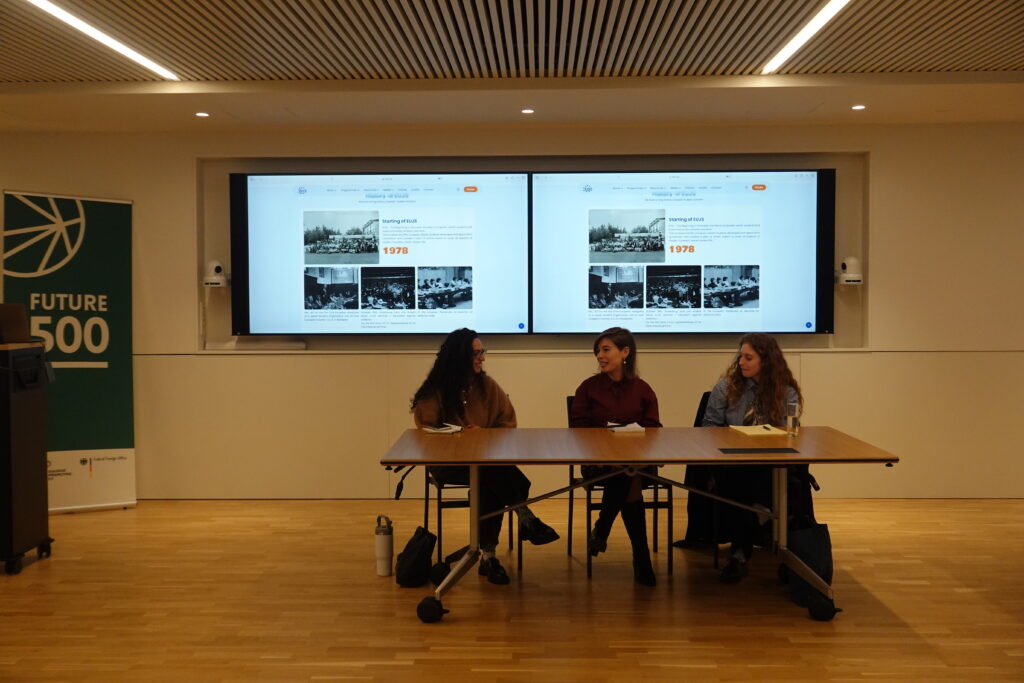
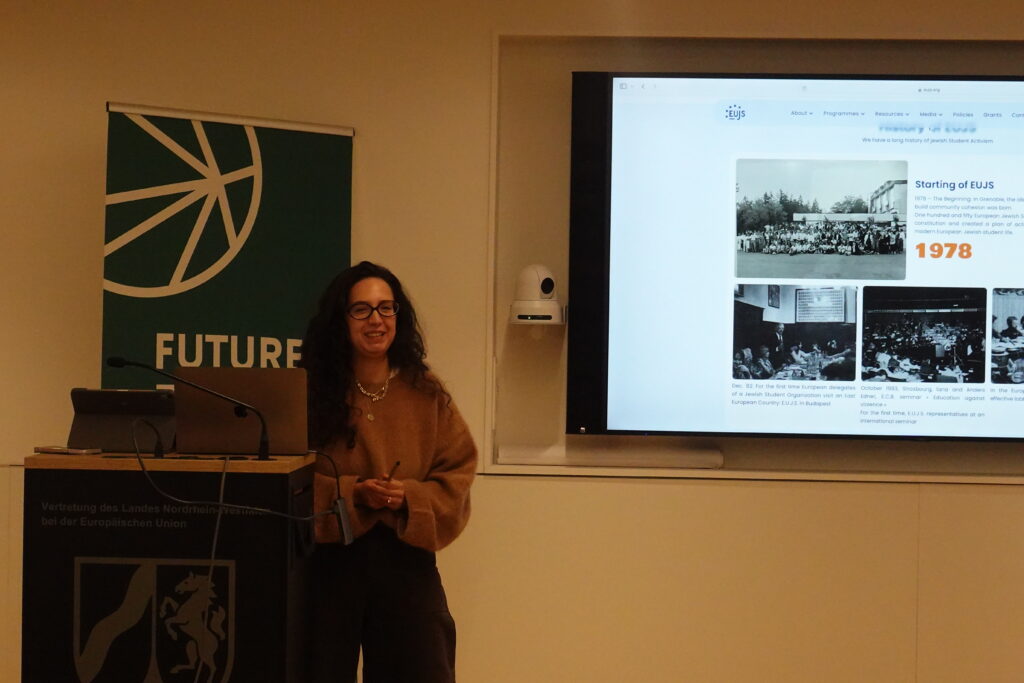
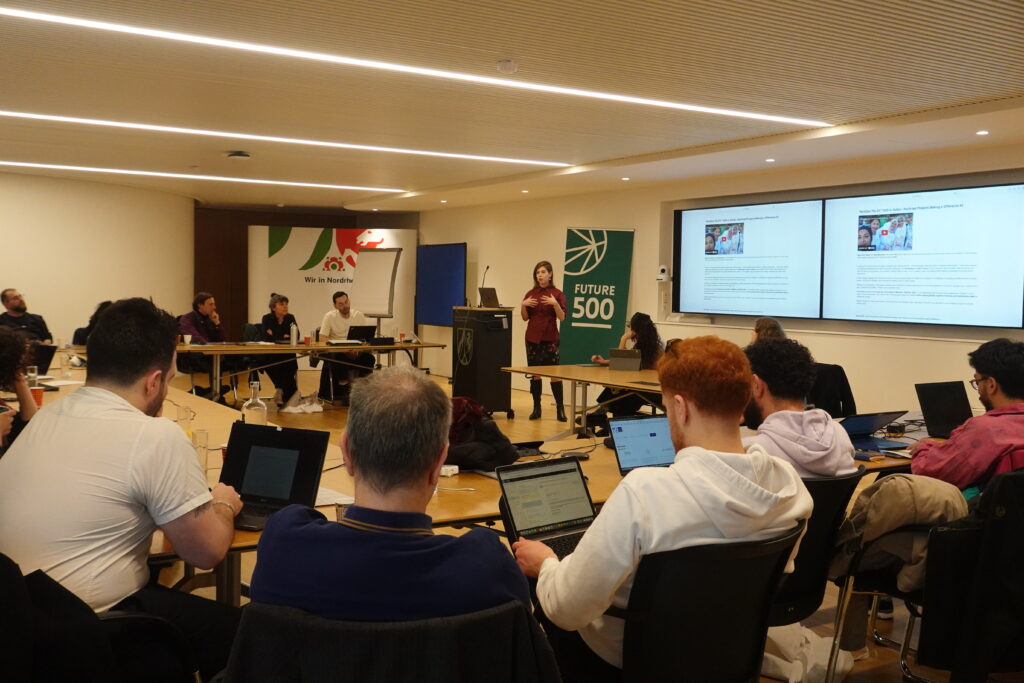
16 March 2026 | 7:00 pm (Entrance: 6:30 pm)
Representation of North Rhine-Westphalia to the European Union, Brussels
With Camila Piastro (European Union of Jewish Students),
Barbara von Freytag (Journalist, Political Analyst),
Furkan Yüksel (Political Educator),
Prof. Dr. Achim Rettinger (Trier University, TWON)
Moderation: Igor Mitchnik (Executive Director, Austausch e.V.)
The breakdown of interfaith dialogue after October 7th revealed dialogue without structural change is too fragile to survive crises, while policy without relationship is hollow. Simultaneously, authoritarianism rises through democratic structures as institutions lack tools to challenge it from within. European societies now face converging crises: algorithmic curation and AI-driven communication reshape public discourse even as interreligious polarisation, displacement tensions, disinformation, and eroded dialogic capacity intensify. These intersecting challenges demand sustainable solutions that build both structural resilience and relational trust.
The public panel examines critical questions: How can dialogue rebuild after crisis and collective trauma? How are AI, platforms, and media shaping narratives and interreligious relations? What can practitioners working across war, discrimination, and community activism teach us? How do we create spaces – online and offline – that strengthen trust and genuine conversation?
With international experts, we’ll explore how digital technologies, media narratives, and community practices intersect – amplifying division or opening pathways to rebuild dialogue, strengthen solidarity, and renew democratic culture through cross-border cooperation.
The Future 500 spring workshop “Rebuilding Bridges: Dialogue, Trust and Solidarity Post October 7th” brings together European professionals and leaders to examine the key questions shaping dialogue and social cohesion today:
European societies face accelerating social fragmentation amid compounding crises. Digital and analogue environments increasingly mediate how communities interpret events, navigate conflict, and construct trust. Algorithmic curation, AI-driven communication, and evolving media ecologies fundamentally reshape social relations and public discourse.
These transformations intersect with mounting societal challenges: interreligious polarisation, displacement-driven social tensions, proliferating disinformation, and the erosion of dialogic capacity following collective trauma. Yet this critical juncture also generates emergent possibilities for renewed cooperation and democratic engagement.
The Future 500 programme invites you to take on the challenges of these urgent transformations. In partnership with TWON (Twin of Online Social Networks) and leading international experts, we will explore how digital technologies, traditional media narratives, and community practices intersect – how they can amplify division and mistrust, but also how they can open pathways for rebuilding dialogue, strengthening solidarity, and renewing democratic culture.
Through workshops, interactive sessions, simulations, public events and encounters with experts, participants will explore both the risks and the possibilities of our digital and social environments, with a particular focus on rebuilding trust across divided communities.
The workshop is organised in cooperation with TWON (Twin of Online Social Networks), an EU-funded project that sets out to study the potentially harmful effects of online social networks (OSNs) on democratic debates and to provide the European Commission with strategic recommendations for possible regulation of technology companies or platform operators.
The Future 500 programme brings together Europe’s most promising talents from politics, business, academia, the arts and civil society. Future 500 develops concrete socio-political initiatives through international interreligious-worldview and intercultural dialogue, implementing these within European civil society. Through its work, Future 500 sustainably strengthens social cohesion across Europe.
7 – 9 October 2025
Chemnitz, Germany
In an age where algorithms decide which histories survive and which vanish into digital oblivion, the question of how Europe remembers its past has become a battleground for democracy itself. As polarisation deepens and shared narratives fracture, remembrance is no longer simply a matter of monuments and memorials – it is increasingly shaped by profit-driven platforms, emotional dynamics, and digital architectures that privatise and fragment collective memory. This autumn, in Chemnitz – a city reinventing itself as European Capital of Culture while confronting its own challenging histories – artists, civic activists, and digital experts gathered to reclaim remembrance from the margins of the internet. Their mission: to prove that democratic memory work can not only survive digital fragmentation, but emerge stronger, more participatory, and more inclusive than ever before.


(Foto: Natalia Reich)
In response to this challenge, the Future 500 Chemnitz Study Trip collaborated with the Coalition for Pluralistic Public Discourse (CPPD), Dagesh – Jewish Art in Context, and the EU-funded research project TWON to connect remembrance culture with digital literacy and democratic participation. Based in a city characterised by renewal and challenging histories, and within the context of the European Capital of Culture, the collaboration fostered innovative approaches to inclusive remembrance. It demonstrated that, through collaboration and critical engagement, collective memory can withstand digital fragmentation and emerge stronger and more participatory.


The programme brought together artists, local organisations, experts and civic actors to explore new forms of remembrance in the digital age. Through performances, workshops and public discussions, participants examined the intersection of technology, culture and local histories in shaping collective memory.


(Fotos: Anne Schober)
It began with a concert and an artist talk by Alex Stolze and Daniel Laufer as part of Dagesh Studio on the Road – #Sukkot Edition. His album Raash ve Ruach reflects on the events of 7 October 2023 and the resilience of Jewish life today. This artistic opening set the tone for the following days, presenting remembrance as a living, dialogical process. Interactive formats such as the TWON Citizen Lab invited participants and the public to experience the ways in which digital platforms structure emotional dynamics and public opinion, prompting reflection on transparency and accountability online. Discussions on political memory work and creative resistance explored how remembrance can be practised across communities and platforms, while a session on the Vietnamese diaspora in Chemnitz brought migration histories, community memories, and experiences of racism to the fore. The public panel “Practices of Remembrance in Digital Spaces,” featuring Dr. Jonas Fegert, Nhi Le, Susanne Siegert, and moderator Benjamin Fischer, brought the discussion to a wider audience by examining how AI and social media not only challenge traditional forms of remembrance but also open up new possibilities for digital memory work – expanding its reach, accessibility, and creative expression through platforms such as digital archives and interactive formats. The panel took place at the Offener Prozess – Documentation Center on the NSU Complex, a particularly meaningful venue as it engages with the legacies of right-wing violence and promotes critical, participatory approaches to remembrance and justice in contemporary Germany. By connecting diverse perspectives – from local histories to digital ethics – the programme turned Chemnitz into a laboratory for shared remembrance. It demonstrated how collaborative initiatives can translate complex histories into shared responsibility, strengthening both cultural participation and democratic resilience.


The Chemnitz Study Trip made one thing clear: remembrance in the digital age must be participatory and critically aware of power structures. It reaffirmed the unique role of Future 500 and DialoguePerspectives e.V., with its different programmes, as an interreligious platform fostering pluralism online and offline. Defending democratic memory today means defending the spaces in which it is shared, discussed, and transformed – both online and off.
October 7-11, 2025
Venice, Italy
DialoguePerspectives e.V. in partnership with the Centro Tedesco di Studi Veneziani
Europe’s capacity to navigate religious and cultural pluralism will fundamentally determine its future stability and cohesion. The European Leadership Workshop 2025 employed Venice’s historical experience with religious and cultural diversity as a methodological framework for examining contemporary interreligious and worldview relations, demonstrating that historical precedents offer indispensable guidance for addressing present challenges. The programme convened 20 current and future European leaders representing diverse professional, geographic, and disciplinary backgrounds to engage in rigorous collaborative analysis of historical models and their contemporary applications. The workshop addressed all dimensions of Future 500 mission: examining the role of religion in pluralistic societies, challenging different memory cultures, and developing strategies to combat antisemitism and racism. The outcomes substantiate that bringing together pluralistic cohorts of dedicated individuals from diverse backgrounds to address contemporary challenges through collaborative learning and policy development yields substantial results. This approach represents a replicable and scalable model for European collaboration that warrants strengthening and expansion.


# Examining Plurality, Memory, and Faith in Venice
The Venice workshop began with a keynote by Prof. Dr. Rafael Arnold (University of Rostock), who demonstrated how the Ghetto served as a miniature representation of Jewish existence – a space defined by varied origins, languages, and religious practices. Tours of the Scola Italiana and Scola Spagnola synagogues revealed how Venice’s Jewish population preserved their unique identities while participating actively in the city’s public sphere. In his presentation Planetary Ghetto: Past, Present, Future Misunderstandings, Prof. Dr. Shaul Bassi (Ca’ Foscari University of Venice; Beit Venezia) examined how modern antisemitic discourse relies on falsified historical depictions of Jewish communities. He characterised the Ghetto as a dynamic centre of intellectual activity and endurance, drawing connections between 16th-century Venice and current struggles with antisemitism and climate-induced displacement. Dr. Francesco Piraino (Cini Foundation) analysed how Murid Senegalese-Italian artists Maïmouna Guerresi and Moulay Niang combine creative expression with spiritual inquiry to confront racism and sexism. By referencing Venice’s multi-faith heritage—including Jewish, Armenian, and Christian populations living side by side – he illustrated art’s capacity to bridge theological and cultural differences. Berlin-based writer Deniz Utlu shared readings from his work, discussing with Petra Schäfer (Centro Tedesco di Studi Veneziani) how individual and communal memories of migration and identity intersect to enrich dialogue in pluralistic societies. Matteo Gabrielli led a tour highlighting Venice’s historical approaches to diversity management: self-governing yet connected communities, guild-based economic partnership, equitable legal structures, and religious pluralism mechanisms that preserved social cohesion.


In a world café format, participants presented their own projects, deepening the contextualisation of the workshop’s themes through practical examples and fostering cross-sectoral dialogue. Throughout the programme, discussions were infused with awareness of pressing contemporary challenges: the omnipresent climate crisis and its implications for displacement and social cohesion, as well as the peace agreement being prepared in the Middle East, which provided a timely backdrop for reflections on dialogue and conflict resolution.
Four core principles crystallised throughout these sessions:


The 20 attendees – drawn from government, academia, civil society, the arts, and religious institutions – applied these lessons to develop a collaborative policy document, Strengthening European Unity Through Faith and Worldview Engagement. This paper converts historical learning into concrete proposals spanning four areas: navigating memory cultures, confronting antisemitism and racism, partnering with faith communities to strengthen social cohesion, and harmonising religious diversity with collective civic principles. The results will be published as a DialoguePerspectives e.V. report by late 2025, providing practical direction for policymakers, civil society organisations, and religious communities throughout Europe. By combining historical analysis, artistic exploration, and joint policy development, participants created implementation-ready approaches for contemporary challenges.
The workshop affirmed that historical insight remains vital to contemporary pluralism: Venice’s centuries-long experience reveals both the promise and complexity of living with difference. The emerging network of leaders will continue advancing these insights across Europe, amplifying Future 500’s mission to strengthen unity through diversity.